


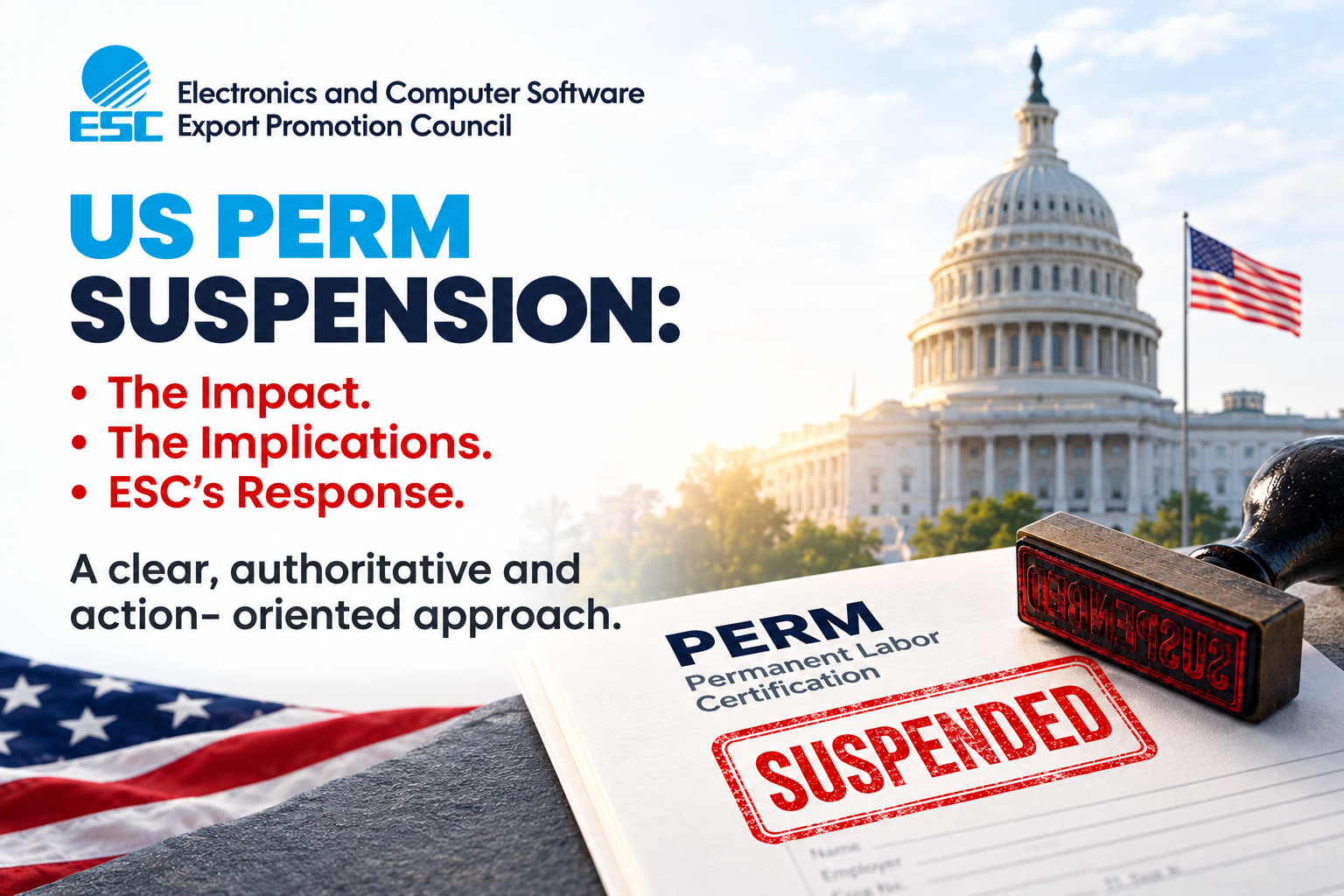
US PERM Suspension: What It Means for India’s IT and Software Exporters
The recent suspension of eight companies from the US PERM labour-certification process highlights a changing regulatory environment for Indian technology exporters. While the immediate operational impact may be limited, the development raises important questions about workforce planning, client expectations, compliance preparedness and the future of cross-border technology services.
On 8 October 2026, the US Department of Labor suspended TCS, Infosys, Wipro, HCLTech, Cognizant, Capgemini, Microsoft and Adobe from the PERM labour-certification process, pending federal investigations. No findings had been published at the time of the reported action, and the suspension does not itself cancel existing H-1B visas or green cards.
PERM is a labour-certification process that generally precedes an employer’s filing of an immigrant petition for a foreign employee. It is distinct from a visa or an existing green card.
Beyond the Headlines: A Structural Shift in Service Delivery
The suspension needs to be viewed in the context of a broader series of US policy changes affecting skilled-worker mobility and overseas staffing models. These include changes to H-1B petition costs, the introduction of wage-weighted selection and increased scrutiny of employers’ labour and workforce practices.
Together, these developments point to a changing environment for companies that have traditionally relied on deploying Indian professionals to client locations in the United States.
The implications extend beyond the eight companies named in the suspension. Mid-sized technology companies, IT services exporters and SMEs may also encounter greater scrutiny from clients, more detailed compliance requirements and new contractual expectations concerning local hiring and delivery arrangements.
For these businesses, the challenge may be less about immediate revenue loss and more about the potential impact on client confidence, contract negotiations, talent retention and the cost of delivering services internationally.
What It Could Mean for Indian Exporters
In the near term, companies may need to respond to more detailed client questions about workforce composition, labour compliance and delivery continuity. Contract renewals and new engagements could involve additional scrutiny, while businesses with limited legal and compliance resources may find it more difficult to navigate changing requirements.
Over the longer term, the economics of onsite and offshore delivery could change. Greater emphasis on local hiring in the US may affect operating costs and encourage exporters to reconsider how they structure international teams and client engagements.
This could accelerate a shift towards managed services, outcome-based contracts and remote delivery models in which value is measured by business results rather than the number of professionals deployed onsite.
Artificial intelligence and automation may also play a greater role in helping companies improve productivity, protect margins and deliver more value to clients.
Practical Considerations for Exporters
In this evolving environment, Indian technology exporters may benefit from reviewing their business models and preparing for greater regulatory and contractual scrutiny.
Strengthening compliance preparedness:
Companies could review their labour-condition applications, PERM records and relevant workforce practices with qualified legal counsel, particularly where changes in employment or workforce arrangements may invite additional scrutiny.
Preparing for client due diligence:
Maintaining accurate, readily available information on workforce composition, delivery centres, local hiring and relevant compliance practices may help companies respond to client queries with greater confidence.
Moving towards outcome-based delivery:
Expanding managed services, remote delivery and outcome-based engagements could help reduce dependence on traditional staff-augmentation models and provide greater flexibility in serving international clients.
Building strategic delivery partnerships:
Where commercially appropriate, partnerships that support local or nearshore delivery may offer alternatives to establishing and maintaining extensive overseas operations independently.
Diversifying export markets:
Exploring opportunities across Europe, the United Kingdom, Japan, Australia, the Gulf and other markets can help reduce dependence on a single geography and broaden the international customer base.
Accelerating AI-led productivity:
Investment in AI-enabled delivery, automation and higher-value technology solutions can strengthen competitiveness as client expectations and delivery economics evolve.
These considerations are not limited to large IT services companies. They are also relevant to smaller exporters and technology enterprises seeking to build sustainable international business relationships.
A Broader Trade and Market-Access Perspective
The evolving environment also highlights the importance of viewing skilled-services mobility within the wider context of international trade and market access.
There is merit in continued consideration of reciprocal skilled-services mobility, social-security coordination and stronger market-diversification support within relevant bilateral trade discussions. Such issues have implications for the competitiveness of services exporters and the ability of Indian technology companies to serve global clients efficiently.
At the same time, India’s technology export ecosystem extends well beyond traditional onsite IT services. Electronics, embedded technologies, engineering research and development, AI-led solutions and other high-value technology segments offer opportunities to strengthen and diversify the country’s export portfolio.
A balanced response would therefore combine regulatory preparedness with business-model innovation, market diversification and a continued focus on higher-value technology offerings.
Looking Ahead: Competitiveness Through Preparedness
The PERM suspension is an important development, but its wider significance lies in what it signals about the changing conditions under which international technology services are delivered.
The United States remains an important market for Indian technology companies. However, succeeding in an evolving regulatory environment may require exporters to rethink traditional delivery models, strengthen compliance preparedness, invest in productivity and expand their international market presence.
For Indian technology exporters, the way forward lies in combining informed decision-making with operational resilience, innovation and a broader global outlook.
The United States is not closing to Indian services. It is closing to one way of delivering them. The opportunity is to adapt, strengthen competitiveness and ensure that Indian technology enterprises remain well positioned to serve an evolving global marketplace.

Electronics and Computer Software Export Promotion Council of India (ESC), one of India’s most dynamic premier trade promotion organisations sponsored by the Government of India.
Copyright @ Electronics and Computer Software Export Promotion Council
